
Digital Citizenship Education
Preparing Responsible Learners in an Information Society
DOI:
https://doi.org/10.64591/86n95a77Keywords:
Digital Citizenship, Media Literacy, ICT IntegrationAbstract
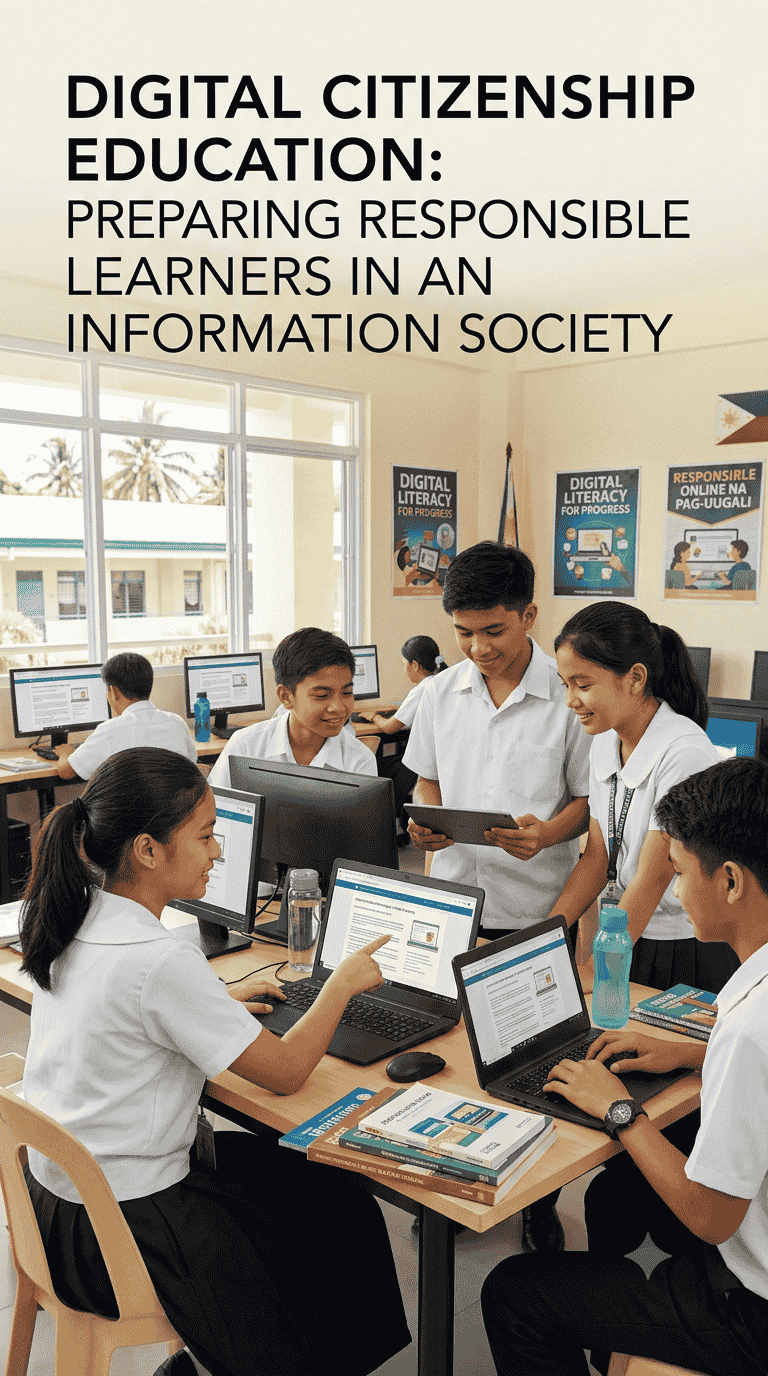
Digital citizenship education equips learners with the knowledge, skills, and ethical values needed to participate responsibly in an increasingly digital society. By integrating ICT, media literacy, and responsible online behavior into education, schools foster critical thinking, digital responsibility, and informed civic engagement. Strengthened by teacher preparation and supportive educational policies, digital citizenship education prepares learners to navigate digital environments safely, ethically, and effectively.
References
Choi, M. (2016). A concept analysis of digital citizenship for democratic citizenship education in the Internet age. Theory & Research in Social Education, 44(4), 565–607.
Ribble, M. (2015). Digital citizenship in schools: Nine elements all students should know (3rd ed.). International Society for Technology in Education (ISTE).
Soriani, A. (2019). From media education to digital citizenship: Origins, perspectives and policy implementations in the school systems across Europe. Ricerche di Pedagogia e Didattica, 14(3).
UNESCO. (2024). Global citizenship education in a digital age: Teacher guidelines. UNESCO.
von Gillern, S., Korona, M., Wright, W., Gould, H., & Haskey-Valerius, B. (2024). Media literacy, digital citizenship and their relationship: Perspectives of preservice teachers. Teaching and Teacher Education, 138, 104404.
Downloads
Published
Issue
Section
License
Copyright (c) 2026 TECH TAUGHT

This work is licensed under a Creative Commons Attribution 4.0 International License.


