
Blended Learning in Higher Education
Opportunities, Challenges, and Future Directions
DOI:
https://doi.org/10.64591/tjrwf391Keywords:
Blended Learning, Higher Education, Digital LearningAbstract
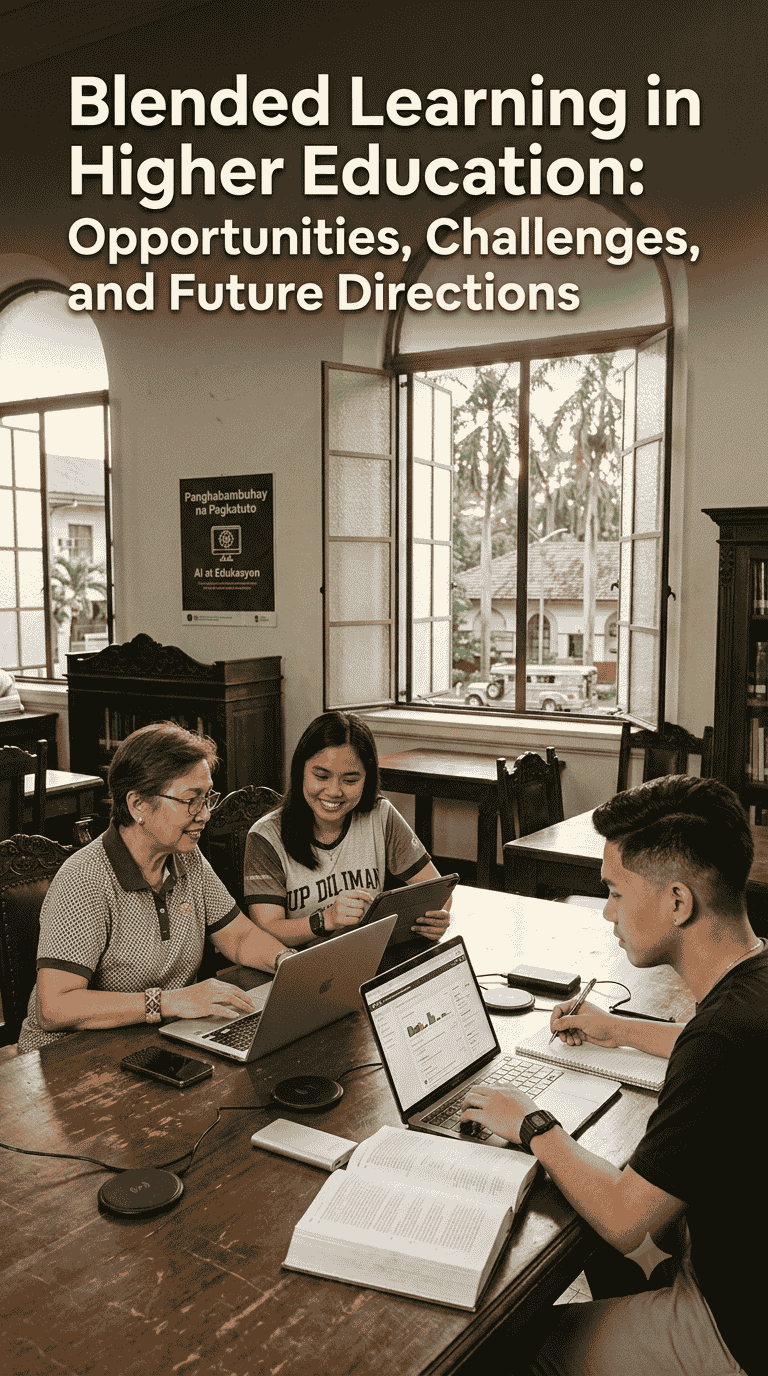
Blended learning integrates face-to-face instruction with digital technologies to create flexible, student-centered, and engaging learning environments in higher education. It enhances learner autonomy, digital competence, and employability while promoting active participation and personalized learning. Despite challenges related to digital access, literacy, and instructional readiness, effective institutional support and sound pedagogy ensure that blended learning remains a sustainable approach to educational innovation.
References
Boelens, R., De Wever, B., & Voet, M. (2017). Four key challenges to the design of blended learning: A systematic literature review. Educational Research Review, 22, 1–18. https://doi.org/10.1016/j.edurev.2017.06.001
Broadbent, J., & Poon, W. L. (2015). Self-regulated learning strategies and academic achievement in online higher education learning environments: A systematic review. The Internet and Higher Education, 27, 1–13. https://doi.org/10.1016/j.iheduc.2015.04.007
Graham, C. R. (2013). Emerging practice and research in blended learning. In M. G. Moore (Ed.), Handbook of Distance Education (3rd ed., pp. 333–350). Routledge.
Hrastinski, S. (2019). What do we mean by blended learning? TechTrends, 63(5), 564–569. https://doi.org/10.1007/s11528-019-00375-5
Martin, F., Polly, D., Jokiaho, A., & May, B. (2020). Global standards for enhancing quality in online and blended learning. Online Learning, 24(2), 1–6. https://doi.org/10.24059/olj.v24i2.2207
Downloads
Published
Issue
Section
License
Copyright (c) 2026 TECH TAUGHT

This work is licensed under a Creative Commons Attribution 4.0 International License.


