
Artificial Intelligence in Education
Enhancing Learning Without Replacing Teachers
DOI:
https://doi.org/10.64591/jt134z90Keywords:
Artificial Intelligence (AI), Teacher Professional Development, Personalized LearningAbstract
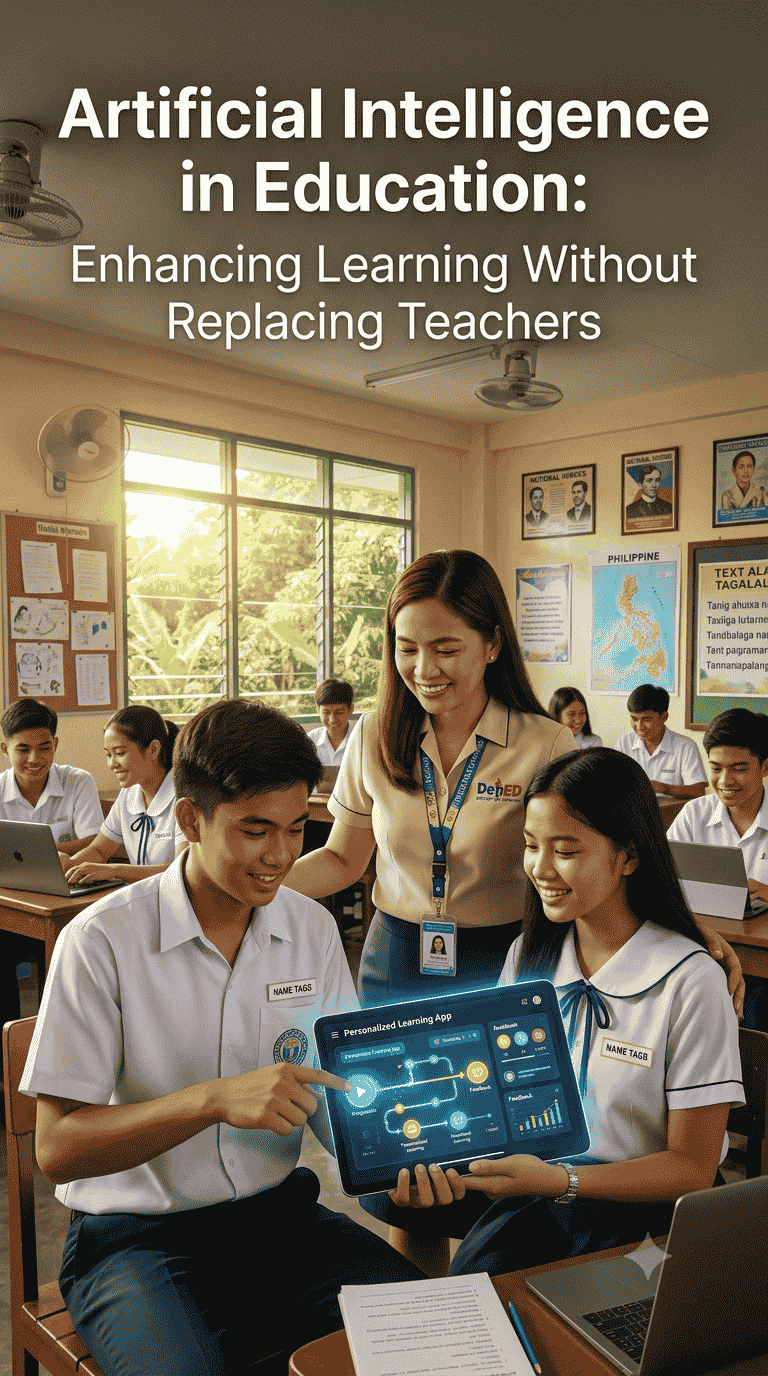
Artificial intelligence (AI) is transforming education by personalizing learning, improving instructional efficiency, and supporting teachers in delivering more effective instruction. While AI enhances student engagement and automates routine educational tasks, it cannot replace the human qualities of educators, such as empathy, critical thinking, and mentorship. Responsible AI integration, supported by teacher professional development and ethical policies, ensures that technology complements rather than replaces teachers in creating inclusive and meaningful learning experiences.
References
Chan, C. K. Y., & Tsi, L. H. Y. (2024). Will generative AI replace teachers in higher education? A study of teacher and student perceptions. Studies in Educational Evaluation, 83, 101395.
Holmes, W., Bialik, M., & Fadel, C. (2019). Artificial intelligence in education: Promises and implications for teaching and learning. Center for Curriculum Redesign.
Organisation for Economic Co-operation and Development. (2026). OECD digital education outlook 2026: Exploring effective uses of generative AI in education. OECD Publishing.
UNESCO. (2023). Guidance for generative AI in education and research. UNESCO Publishing.
Yang, Y., Zhang, Y., & Chen, X. (2024). Artificial intelligence in teaching and teacher professional development: A systematic review. Computers and Education: Artificial Intelligence.
Downloads
Published
Issue
Section
License
Copyright (c) 2026 TECH TAUGHT

This work is licensed under a Creative Commons Attribution 4.0 International License.


